
Peter Jackson’s The Lord of the Rings trilogy stands as a monumental achievement in cinematic history, hailed not only for its breathtaking visuals and epic storytelling but also for its remarkable fidelity to J.R.R. Tolkien's original work. Despite the inherent challenges of adapting a complex and richly detailed fantasy novel into film, Jackson’s adaptation has been widely praised for preserving the spirit and essence of Tolkien’s Middle-earth. Here’s a closer look at how Jackson's films stay true to Tolkien's literary masterpiece.
Respecting the Source Material
From the outset, Jackson and his team demonstrated a profound respect for Tolkien’s work. The trilogy maintains the narrative’s integrity by closely following the central plot and themes of The Lord of the Rings. The core story of the One Ring’s journey from the Shire to Mount Doom, and the subsequent struggle against Sauron, remains central to the films, mirroring Tolkien’s intricate plotting and character development.

Sir Ian McKellan as Gandalf the Grey and Elijah Wood as Frodo Baggins in The Lord of the Rings: The Fellowship of the Ring (2001)
Faithful Character Portrayal
One of the most notable aspects of Jackson's adaptation is its faithful portrayal of Tolkien’s characters. Each character, from Frodo Baggins to Aragorn and Gandalf, is brought to life with a deep understanding of their literary counterparts. Elijah Wood’s portrayal of Frodo captures the hobbit’s resilience and vulnerability, while Ian McKellen’s Gandalf embodies the wise and powerful wizard that Tolkien envisioned. The nuanced performances reflect the depth of Tolkien’s characters, ensuring they resonate as strongly on screen as they do in the pages of the book.
Thematic Consistency
Jackson’s films also excel in capturing the thematic richness of Tolkien’s work. Themes such as the corrupting influence of power, the struggle between good and evil, and the importance of friendship and sacrifice are woven seamlessly into the narrative. The portrayal of the One Ring as a symbol of absolute power and corruption is handled with great care, reflecting Tolkien’s exploration of these themes. The depiction of characters like Gollum illustrates the ring’s dehumanizing effects, staying true to the dark undertones present in the novel.
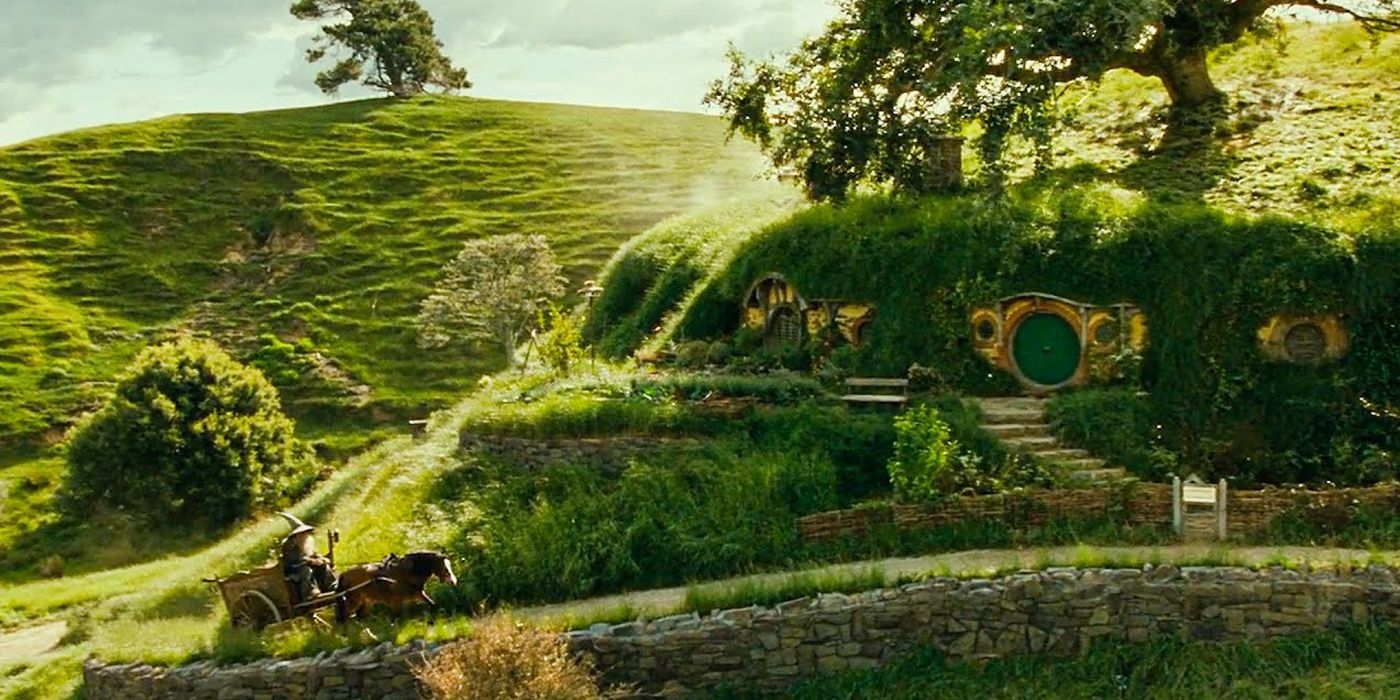
The Shire, home to the Hobbits.
Detailed World-Building
The world-building in Jackson’s trilogy is another testament to the film’s fidelity to Tolkien’s vision. The meticulous attention to detail in the creation of Middle-earth—from the majestic landscapes of New Zealand to the intricately designed sets of Rivendell, Rohan, and Minas Tirith—mirrors Tolkien’s vivid descriptions. The film’s visual representation of Middle-earth brings Tolkien’s world to life with an authenticity that honors the spirit of his descriptions, enhancing the immersive experience for viewers.
Adaptational Changes with Purpose
While Jackson’s adaptation is lauded for its faithfulness, it’s important to recognize that some changes were made to fit the cinematic format. Subplots and characters, such as Tom Bombadil, were omitted or altered for pacing and narrative clarity. However, these adjustments were made thoughtfully, with a clear understanding of the source material’s essence. Jackson and his team ensured that these changes did not undermine the original story's core elements, preserving the narrative’s integrity and emotional impact.
Conclusion
Peter Jackson’s The Lord of the Rings trilogy stands as a cinematic triumph that honors J.R.R. Tolkien’s beloved novels. Through meticulous attention to detail, respectful character portrayals, and a commitment to the thematic depth of the source material, Jackson’s films capture the magic and majesty of Middle-earth. By staying true to Tolkien’s vision while adapting the story for the screen, Jackson has created a timeless cinematic adaptation that continues to captivate audiences and celebrate the enduring legacy of Tolkien’s epic saga.

No comments:
Post a Comment